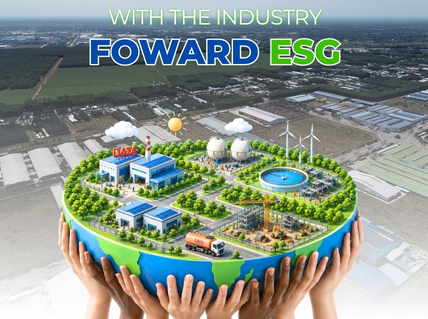


In recent years, ESG (Environmental – Social – Governance) has gradually become a benchmark in the industrial sector, especially for businesses participating in global supply chains. Instead of focusing solely on output and costs, factories are paying more attention to emissions, operational safety, and transparency in governance.
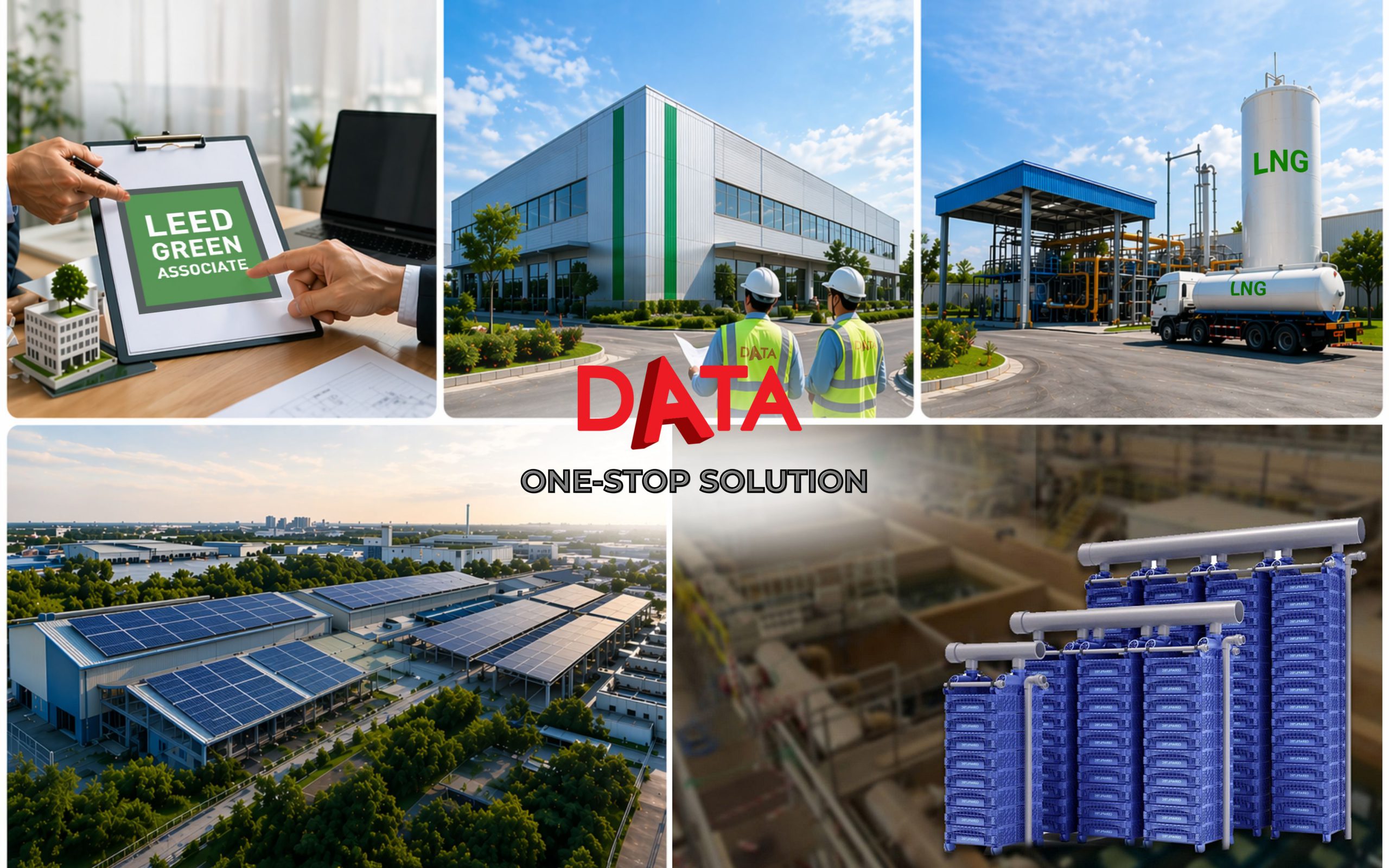
In this context, DATA GROUP Vietnam approaches ESG not as a consultant or contractor, but as an ecosystem comprising five areas of activity: Green certification consulting, construction, gas, solar energy, and water treatment. This approach reflects the reality that ESG is only effective when implemented comprehensively.
ESG in Industry: A Multidimensional Problem
For factories, the “E” Environment factor often begins with energy and emissions. Switching to cleaner fuels like LNG or CNG significantly reduces CO₂ and other pollutants. However, if we only focus on fuel, the effectiveness of ESG will be limited.
The “S” Social factor relates to workplace safety, operating conditions, and the level of impact on the community. Meanwhile, the “G” Governance factor requires a transparent management system with verifiable and reportable data. This necessitates integration between engineering, operations, and governance—rather than a fragmented implementation.

5 Areas of Activity and Roles in ESG
1/ Green Certification Consulting
This is the starting point in many ESG projects. DATA participates in assessing the current situation, building roadmaps, and supporting businesses in applying for certifications such as LEED, EDGE, or internal ESG standards of international partners.
DATA plays a guiding role — helping businesses understand where they are and what needs improvement, instead of investing haphazardly.
2/ Construction
In ESG, construction is not just about building but also involves energy-optimized design, material selection, and technical system layout. A well-designed factory can significantly reduce energy consumption and operating costs in the long term.
Integrating ESG elements from the design phase helps limit the need for renovations or upgrades later.
3/ Industrial Gases
This is the core area in the energy transition problem. DATA deploys LNG/CNG systems with the goal of ensuring:
* Stable combustion efficiency
* Reduced emissions compared to traditional fuels
* Compliance with operational safety standards
More importantly, the system integrates monitoring of consumption and operational data, serving to optimize and report ESG.
4/ Solar Energy
Solar power reduces reliance on the grid and reduces indirect emissions (Scope 2). In DATA’s model, solar does not operate independently but is considered part of the overall energy system, combined with gas to ensure stability.
This approach is suitable for industrial specificities, where a continuous and stable energy source is required.
5/ Water Treatment
Water is often overlooked in ESG, but plays a crucial role in many industries such as food, textiles, or heavy manufacturing.
Water treatment systems not only ensure compliance with environmental regulations but also contribute to resource reuse, reducing pressure on natural water sources.
With Cerafiltec ultrafiltration technology from Germany, the efficiency of recycled water reuse reaches up to 80%.
Conclusion
ESG in industry is not a single solution but an integrated process involving multiple elements: energy, infrastructure, environment, and governance. Effective implementation depends on the ability to connect these areas into a unified system.
With an approach based on five core areas, DATA GROUP Vietnam demonstrates a systematic approach, suitable for the sustainable transformation needs of industrial enterprises today. This is not an immediate destination, but a foundation for factories to gradually adapt to increasingly clear and stringent ESG standards.