

Industrial electricity prices are a crucial indicator reflecting the input costs of production activities. For energy-intensive businesses, fluctuations in electricity prices not only affect operating costs but also impact production and business plans. With electricity costs steadily increasing over the years, optimizing energy costs becomes even more urgent.
- Industrial electricity prices are gradually increasing in line with policy adjustments.
In recent years, electricity prices in Vietnam have shown a steady upward trend. Since the beginning of 2023, electricity prices have been adjusted upwards multiple times. Just in 2025, the average retail price has increased from approximately 2,103 VND/kWh to over 2,204 VND/kWh (excluding VAT), representing a 4.8% increase in the most recent adjustment in May 2025. This is the fourth increase since the beginning of 2023, with previous increases of 3%, 4.5%, and two increases of 4.8%. (EVN Vietnam)
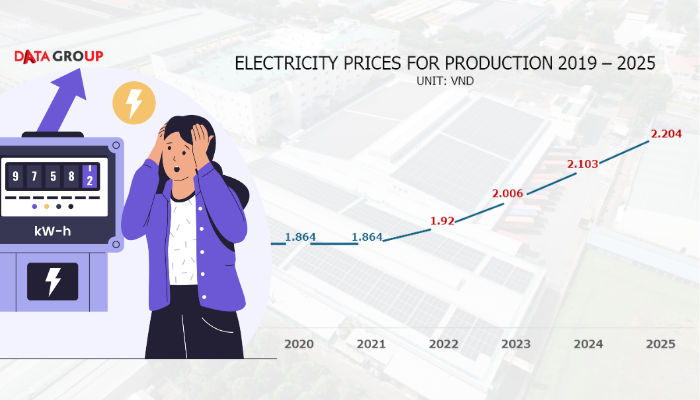
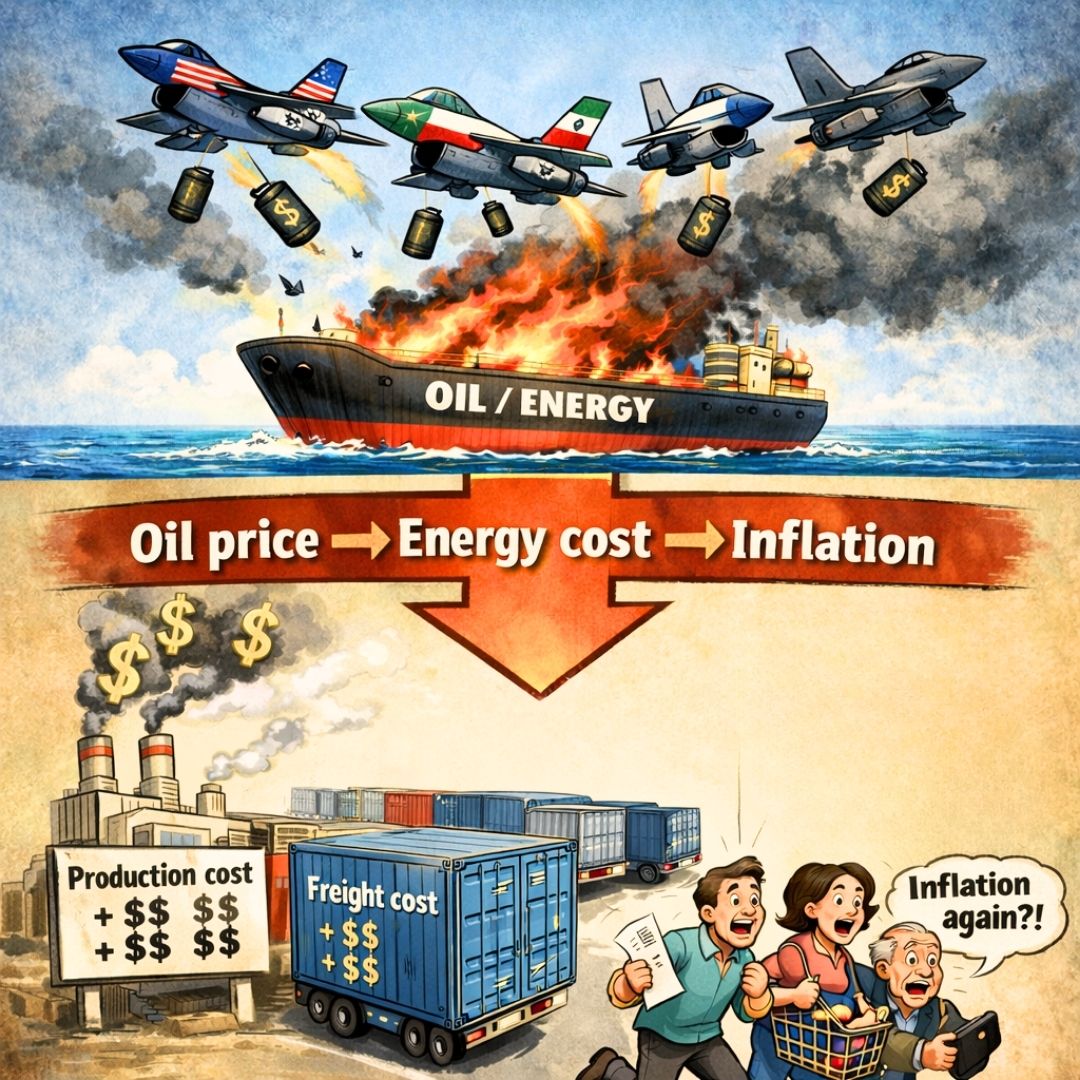
This reflects the fact that the input costs of the electricity sector – including production, transmission, and fuel costs – are under pressure from rising global coal, gas, and oil prices, along with a declining hydropower efficiency ratio relative to total energy supply.
While the increase in industrial electricity prices is not overly drastic, it is cumulative over time, requiring businesses to forecast long-term costs rather than focusing solely on current prices.
- Differences in electricity prices across time slots – impact on production costs.
A distinctive feature of industrial electricity pricing is its time-of-day pricing mechanism: off-peak hours – normal hours – peak hours. This mechanism aims to regulate the load across the entire system and encourage businesses to avoid consuming electricity during peak hours.
|
Electricity prices from EVN (Decision 1279/QD-BCT dated May 9, 2025) Unit: VND |
||||||
| | | Consumed voltage level | > 110kV | 22kV – 110kV | 6kV – 22kV | < 6kV |
| Electricity prices for production | Peak Hours | 9h30 – 11h30; 17h – 20h | 3,266 | 3,398 | 3,508 | 3,640 |
| Normal | 4h – 9h30; 11h30 – 17h; 20h – 22h | 1,811 | 1,833 | 1,899 | 1,987 | |
| Off peak | 22h – 4h next day | 1,146 | 1,190 | 1,234 | 1,300 | |
According to the tariff schedule for 2025, electricity prices for the manufacturing sector at voltage levels below 6 kV range from approximately 1,300 VND/kWh during off-peak hours, 1,987 VND/kWh during normal hours, to 3,640 VND/kWh during peak hours. At higher voltage levels (e.g., 110 kV and above), peak hour prices remain above 3,100 VND/kWh, while off-peak prices are only around 1,094 VND/kWh.
This difference means that if a business produces most of its electricity during peak hours, electricity costs can be nearly three times higher than during off-peak hours. This directly impacts product costs, especially for industries such as steel, ceramics, or textiles – where electricity consumption is a significant part of production costs.
- Solutions for stabilizing electricity costs for businesses.
Given the fluctuations in electricity prices and the shift in time slots, developing cost stabilization solutions is essential. Some practical approaches include:
Optimizing production schedules according to time slots: Based on off-peak and peak hour pricing, businesses can shift high-energy consumption processes to off-peak hours to reduce input costs.
Improving electricity efficiency: Investing in energy-saving equipment and improving production processes to reduce energy losses and extend equipment lifespan.
Integrating alternative energy sources: Installing rooftop solar systems or using on-site renewable energy to reduce complete dependence on the national grid – this is increasingly being considered by businesses as part of their cost stabilization strategy.
Applying these solutions not only reduces electricity costs in the short term but also helps businesses respond more flexibly to future adjustments in electricity pricing policies.